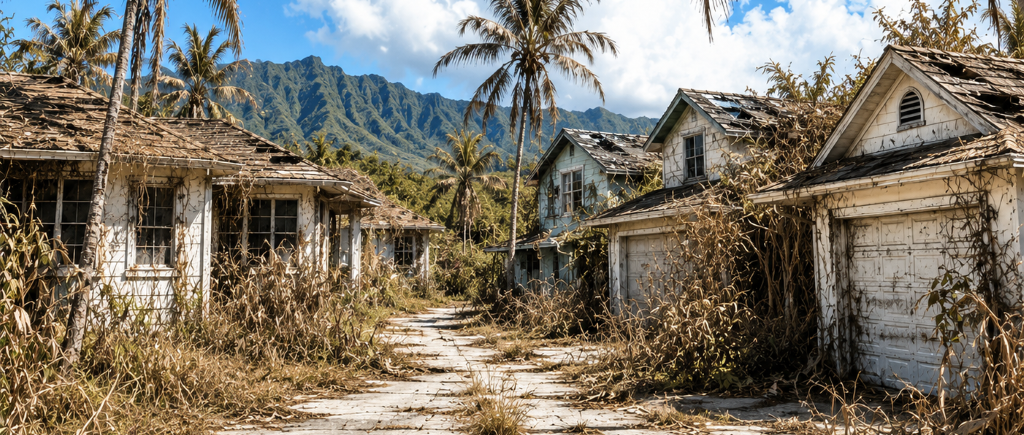
Princeville 2050

Above… an imagined view of Princeville in 2050…

A short walk from our Princeville community, past the end of Hanalei Plantation Road, sit the concrete foundations of what was once Club Med Kauai. Built in the early 1970s, closed by 1980, knocked down to rebar by Hurricane Iwa and never rebuilt. The jungle has been doing the rest for forty years. It’s a useful thing to look at, because it answers a question we never bother to ask: what does failure actually look like? Now picture Princeville the same way in 2050. Condos along the bluff with roofs collapsing in. Driveways cracked, hedges gone wild, palms half-dead from neglect. Pool decks taken back by groundcover. The illustrations in this post have been “enhanced” by AI.

So how would we actually get there?
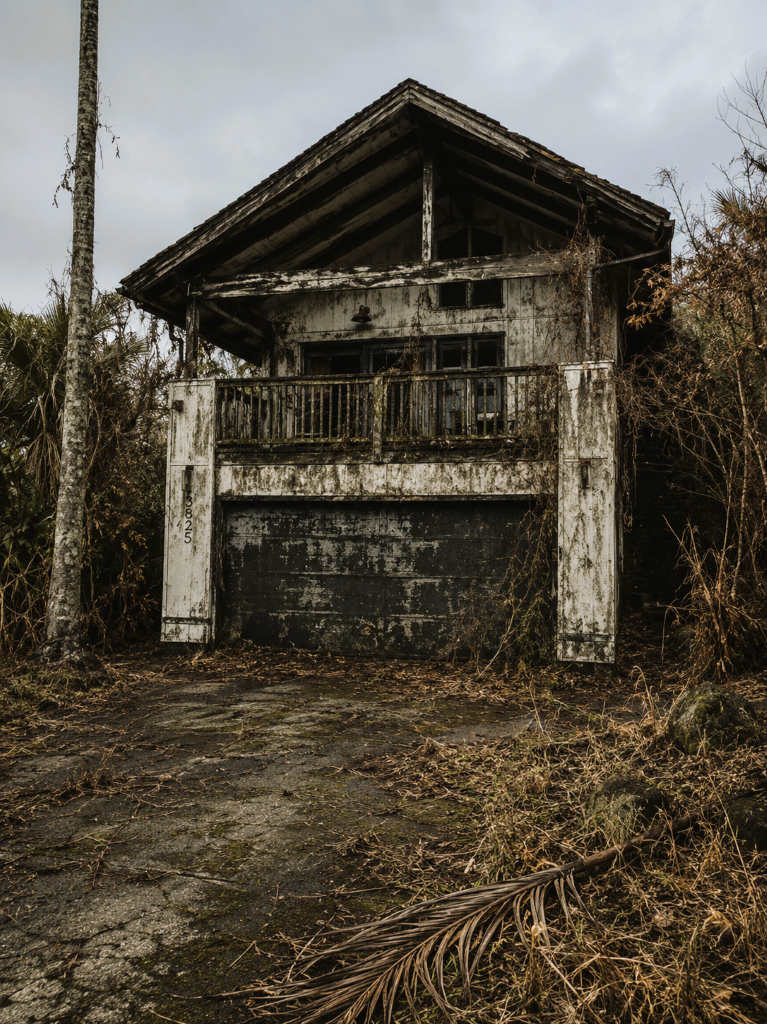
It takes a slow version of a hurricane: An association that can’t decide or get anything done. Reserves that lose ground to construction costs every year. A coastline that keeps eating the road. The North Shore growing more cut off as Kuhio Highway gets less reliable. Short-term renters disappearing because the math no longer works for them. Owners holding properties they can’t easily sell, watching values drift down, deferring maintenance one more year, then one more.

Behind all of that, a management layer that mostly isn’t there. A general manager who treats the job as a place to wait out the day. An office nobody wants to walk into. A Board whose members serve so they can say they’re on a Board, not because they intend to do anything with it. Decisions slipped past quorum. Projects stalled for years. The same problems on the Association’s agenda, meeting after meeting.

And owners. Mostly absentee, mostly tuned out. A third vote in a good year. Most can’t name three directors. Most have never opened a packet. The handful who speak up are easy to write off as cranks. Each piece of that, by itself, is survivable, but they compound. By 2035 the assessments are unaffordable.
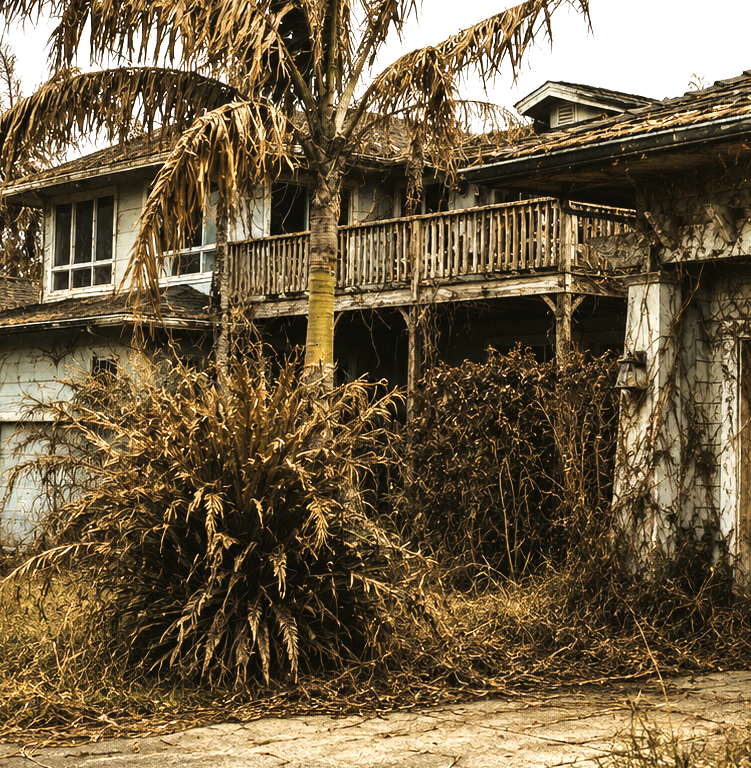
By 2040 the buyers have moved on. By 2050 the foundations are all that’s left, and somebody walks past them on a path the jungle hasn’t quite swallowed yet, and tries to imagine what was once here. None of that is inevitable. It’s also not far-fetched. Club Med thought it would be there forever too.

What keeps Princeville from going that way is fairly boring: A general manager who actually manages. A Board that does the work. Owners who read, vote, and show up. Reserves funded honestly. Roads and drainage fixed before they fail, not after. None of it is glamorous. None of it lends itself to a Nextdoor argument. But it’s the entire game. To all of you in the community, the Club Med foundations are a five-minute drive from your residence. Worth a walk through them now and then, just to remember that things end.

***

Design Rules in Princeville: Why They Exist and Why They Matter

What the governing documents say about the Community Design Committee

Princeville was developed as a planned community, and its appearance and character are guided by its founding documents, including the PHCA Charter of Incorporation, PHCA By-Laws, the Protective Covenants, the Community Rules, and the Community Design Committee (CDC) Architectural Rules.

The Protective Covenants (1971) created the Community Design Committee and require that any building, exterior change, or landscaping modification be reviewed and approved by the Committee before construction begins. The purpose is to ensure that buildings, materials, landscaping, and design are appropriate to the lot, harmonious with the surroundings, and consistent with the overall appearance of the community. The CDC is typically composed of volunteer members appointed by the PHCA Board and supported by staff. The Committee reviews proposed construction, exterior modifications, landscaping, and similar changes, and provides written approvals or required revisions. It can also adopt and update architectural and landscaping rules.

The PHCA Board of Directors remains the governing body of the Association and establishes policies and rules for the community as a whole. The CDC works under this broader governance structure. In practice, the Committee handles design review and technical guidance, while the Board oversees policy, appeals, and community governance. In general terms, the CDC rules cover:

  • Architectural design and materials
  • Building size, height, and setbacks
  • Landscaping and tree removal
  • Exterior paint and roofing
  • Fences, lighting, driveways, and equipment
  • Pools, solar panels, and other exterior additions

The goal is to maintain a consistent design character while protecting property values and the natural beauty of Princeville.

Design rules in planned communities: why they evolve

Almost all large planned communities in the United States have some form of architectural or design review. These rules usually address the same issues that Princeville’s CDC reviews: building appearance, landscaping, fencing, exterior colors, and the visual impact of new construction. Over time, the expectations of residents and investors change. Communities that were designed decades ago often revisit their design rules to reflect new priorities. These priorities can include environmental sustainability, updated construction materials, energy efficiency, or changes in architectural style. As communities mature, they also face practical questions such as how to manage aging homes, renovations, and new building technologies.

Across the United States, many planned communities are updating their design guidelines in response to broader trends. These include greater emphasis on environmentally sensitive construction, storm-resistant materials, water conservation, and landscaping that fits local ecosystems. In a place like Kauai’s North Shore, this often means encouraging designs that blend into the landscape, use natural materials, and respect views of mountains and ocean. Color palettes, rooflines, and landscaping are frequently designed to complement the tropical environment rather than dominate it.

Keeping Princeville attractive over the next two decades

Communities that remain attractive and desirable over time usually do two things well.

  • First, they maintain clear and consistent design rules.
  • Second, they periodically review and update those rules as conditions change.

Many planned communities review their design guidelines every few years to reflect new building technologies, sustainability practices, and changing homeowner expectations. This helps avoid outdated rules while preserving the community’s original design vision. For Princeville, the same principle applies. The community benefits from protecting its scenic setting, maintaining high design standards, and ensuring that new construction fits the North Shore environment. At the same time, the PHCA and the CDC should periodically review their rules to reflect current best practices in architecture, sustainability, and landscaping.

Ideal qualifications for members of the Community Design Committee

Because the CDC reviews architecture, landscaping, and exterior property changes across the community, its members ideally bring a mix of design knowledge, construction experience, and local familiarity. In many communities, committees include people with backgrounds in architecture, building, landscaping, planning, or real estate, along with long-time residents who understand the character of the neighborhood. Princeville’s own CDC has often included volunteers with experience such as architects, builders, and real estate professionals. Beyond professional expertise, the most important qualifications are practical judgment and fairness. Members should be able to read plans, evaluate how projects will affect neighboring properties and the broader landscape, and apply the design rules consistently. Equally important are a willingness to volunteer time, respect for the community’s natural setting, and the ability to balance individual property rights with the shared goal of preserving Princeville’s appearance and long-term property values.

A thoughtful approach can help Princeville remain both visually distinctive and economically strong. Well-maintained design standards protect the character of the community while also supporting property values and long-term investment in the area.

***