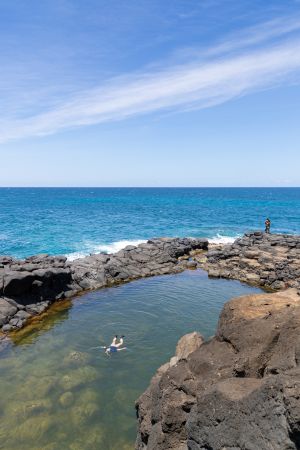
Queen’s Bath is one of the most dramatic places in Princeville and on Kaua‘i’s North Shore. Many people—residents and visitors alike—enjoy walking the trail to see the ocean, watch waves explode against the lava shelf, or take photos of the natural pool carved into the rock. The site is stunning. It is also dangerous. Understanding Queen’s Bath means knowing its history, location, seasonal limits, and a record of serious accidents.
A Short History
The name “Queen’s Bath” finds its origin with earlier Hawaiian bathing pools used by ali‘i, (persons of high rank) but the current was formed when lava flowed into the ocean and hardened into a natural basin. With Princeville’s development in the 1970s, the pool became a known landmark. Social media later turned it into an even bigger attraction.
Where It Is in Princeville

Queen’s Bath sits at the end of Punahele Street and Kapiolani Loop, Behind the gate, a steep trail leads down through mud and roots. The trail ends on a wide lava shelf above the ocean. You will need to walk a couple of hundred yards west on this shelf to the bath. This shelf is fully exposed to open ocean waves which may push you against rocks or take you out to sea. Unlike Hanalei Bay, there is no reef or lagoon in front of it to protect you.
Why Weather and Seasons Matter
The North Shore is famous for huge winter surf. Queen’s Bath becomes extremely dangerous from November through April, when waves slam over the rocks and fill the pool with violent water. The County posts warning signs each winter. Even in summer, a “calm” day can turn dangerous when a long-period swell arrives from far away.
Documented Accidents
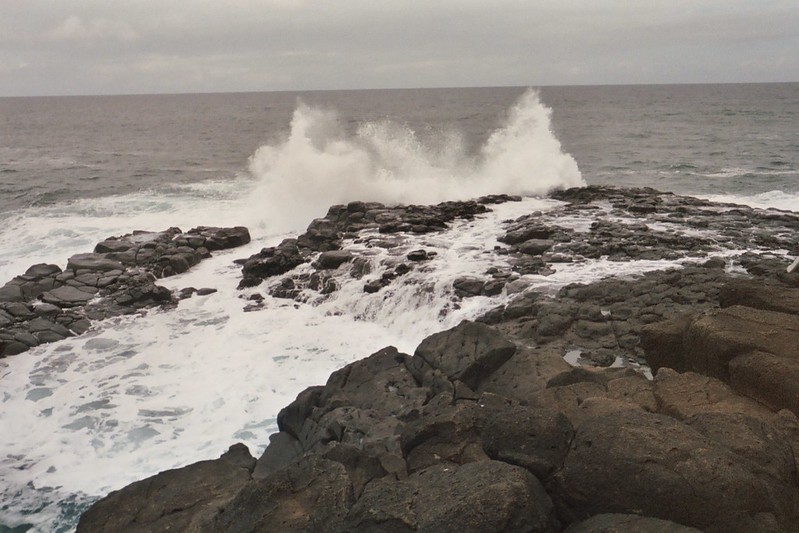
Queen’s Bath has a long history of serious injuries and deaths. Accidents happen in two main places:
- The Trail: Hikers often slip in mud, lose footing on roots and wet rocks, and injured visitors must sometimes be carried uphill by rescuers.
- The Lava Shelf: Unexpected waves can sweep people off the rocks and pull them into deep, turbulent water, where escape becomes almost impossible. Many victims are slammed against the lava shelf by backwash and surf, and several drownings have occurred over the past decades.
These events often happen when people stand near the edge for photos—just seconds before a large set of waves arrives.
Why the Risk Is High
Four factors make Queen’s Bath one of Kaua‘i’s most hazardous spots:
- Unpredictable surf – Set waves can appear without warning.
- Low rock shelf – Waves easily wash over the entire area.
- Strong backwash – Water pulls victims outward after impact.
- Slippery surfaces – Algae and spray reduce balance and footing.
Practical Safety Notes
For both residents and visitors:
- Do not go in winter.
- Stay away from the edge, even on calm days.
- Expect the trail to be muddy and slick.
- Check surf forecasts, but remember they are not guaranteed.
In Closing…
Queen’s Bath is part of what makes Princeville special—wild coastline, sweeping views, and the raw power of the Pacific. But it is also a place where many people have hurt themselves on the slippery trail, especially after heavy rain, or misjudged the ocean and paid a terrible price. Queen’s Bath will always be beautiful. It should also be approached with care.