Princeville 2050

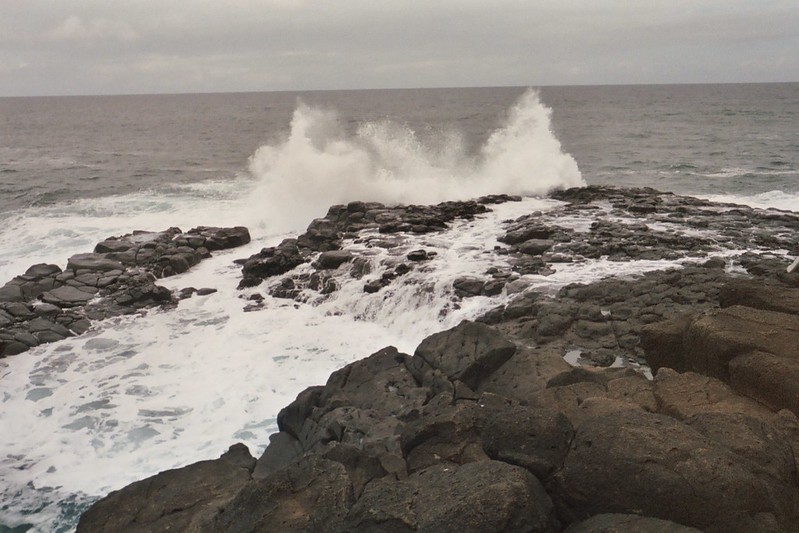
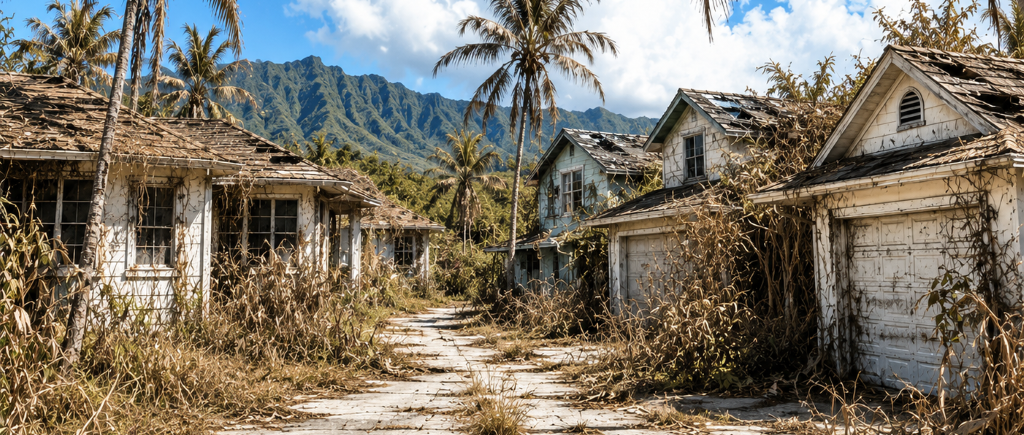
Above… an imagined view of Princeville in 2050…

A short walk from our Princeville community, past the end of Hanalei Plantation Road, sit the concrete foundations of what was once Club Med Kauai. Built in the early 1970s, closed by 1980, knocked down to rebar by Hurricane Iwa and never rebuilt. The jungle has been doing the rest for forty years. It’s a useful thing to look at, because it answers a question we never bother to ask: what does failure actually look like? Now picture Princeville the same way in 2050. Condos along the bluff with roofs collapsing in. Driveways cracked, hedges gone wild, palms half-dead from neglect. Pool decks taken back by groundcover. The illustrations in this post have been “enhanced” by AI.

So how would we actually get there?
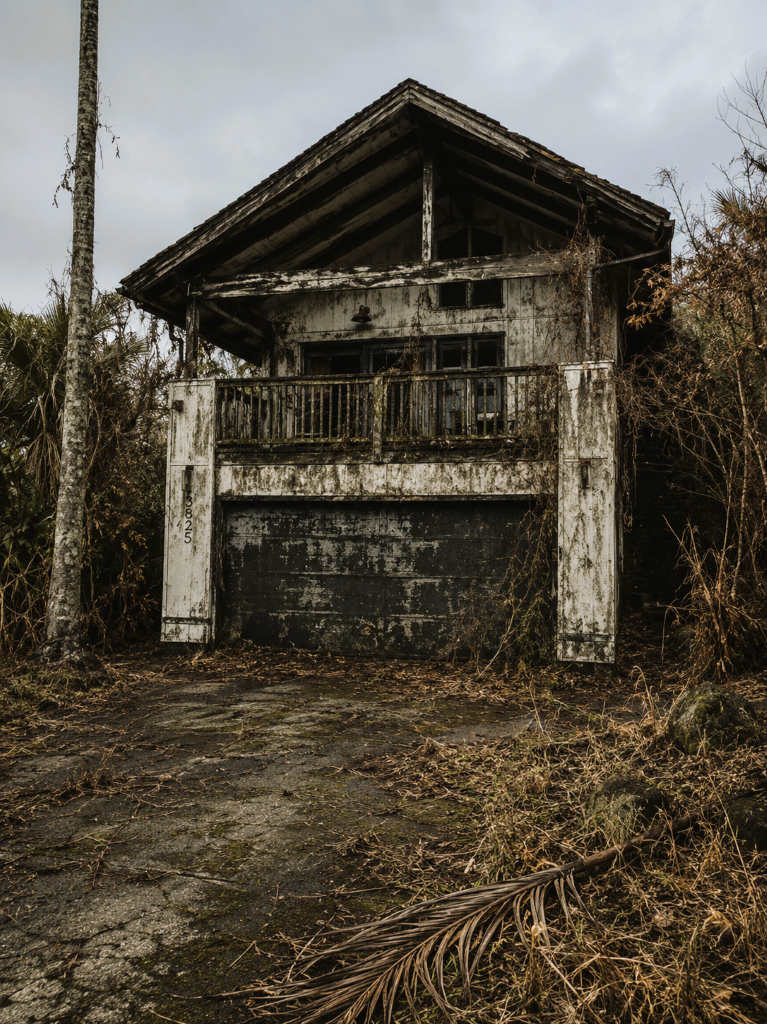
It takes a slow version of a hurricane: An association that can’t decide or get anything done. Reserves that lose ground to construction costs every year. A coastline that keeps eating the road. The North Shore growing more cut off as Kuhio Highway gets less reliable. Short-term renters disappearing because the math no longer works for them. Owners holding properties they can’t easily sell, watching values drift down, deferring maintenance one more year, then one more.

Behind all of that, a management layer that mostly isn’t there. A general manager who treats the job as a place to wait out the day. An office nobody wants to walk into. A Board whose members serve so they can say they’re on a Board, not because they intend to do anything with it. Decisions slipped past quorum. Projects stalled for years. The same problems on the Association’s agenda, meeting after meeting.

And owners. Mostly absentee, mostly tuned out. A third vote in a good year. Most can’t name three directors. Most have never opened a packet. The handful who speak up are easy to write off as cranks. Each piece of that, by itself, is survivable, but they compound. By 2035 the assessments are unaffordable.
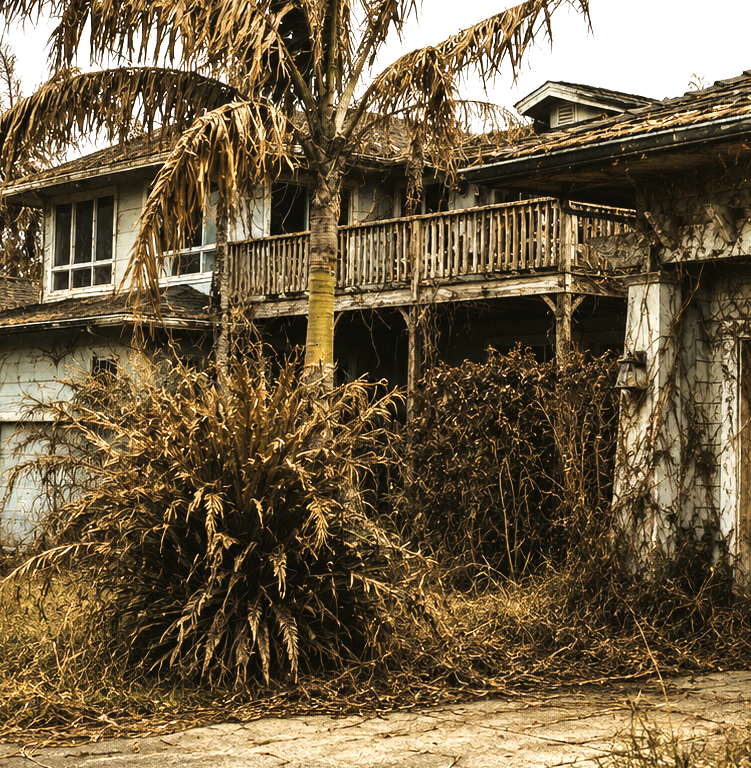
By 2040 the buyers have moved on. By 2050 the foundations are all that’s left, and somebody walks past them on a path the jungle hasn’t quite swallowed yet, and tries to imagine what was once here. None of that is inevitable. It’s also not far-fetched. Club Med thought it would be there forever too.

What keeps Princeville from going that way is fairly boring: A general manager who actually manages. A Board that does the work. Owners who read, vote, and show up. Reserves funded honestly. Roads and drainage fixed before they fail, not after. None of it is glamorous. None of it lends itself to a Nextdoor argument. But it’s the entire game. To all of you in the community, the Club Med foundations are a five-minute drive from your residence. Worth a walk through them now and then, just to remember that things end.

***
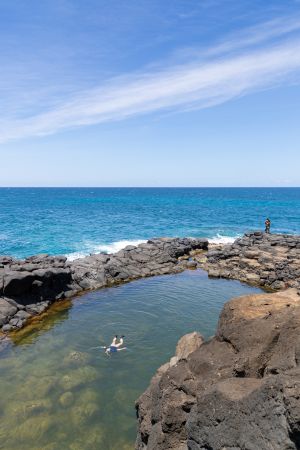
Princeville’s Queen’s Bath: Beauty, Power, and Risk


Queen’s Bath is one of the most dramatic places in Princeville and on Kaua‘i’s North Shore. Many people—residents and visitors alike—enjoy walking the trail to see the ocean, watch waves explode against the lava shelf, or take photos of the natural pool carved into the rock. The site is stunning. It is also dangerous. Understanding Queen’s Bath means knowing its history, location, seasonal limits, and a record of serious accidents.


A Short History

The name “Queen’s Bath” finds its origin with earlier Hawaiian bathing pools used by ali‘i, (persons of high rank) but the current was formed when lava flowed into the ocean and hardened into a natural basin. With Princeville’s development in the 1970s, the pool became a known landmark. Social media later turned it into an even bigger attraction.


Where It Is in Princeville

Queen’s Bath sits at the end of Punahele Street and Kapiolani Loop, Behind the gate, a steep trail leads down through mud and roots. The trail ends on a wide lava shelf above the ocean. You will need to walk a couple of hundred yards west on this shelf to the bath. This shelf is fully exposed to open ocean waves which may push you against rocks or take you out to sea. Unlike Hanalei Bay, there is no reef or lagoon in front of it to protect you.


Why Weather and Seasons Matter

The North Shore is famous for huge winter surf. Queen’s Bath becomes extremely dangerous from November through April, when waves slam over the rocks and fill the pool with violent water. The County posts warning signs each winter. Even in summer, a “calm” day can turn dangerous when a long-period swell arrives from far away.


Documented Accidents

Queen’s Bath has a long history of serious injuries and deaths. Accidents happen in two main places:

  • The Trail: Hikers often slip in mud, lose footing on roots and wet rocks, and injured visitors must sometimes be carried uphill by rescuers.
  • The Lava Shelf: Unexpected waves can sweep people off the rocks and pull them into deep, turbulent water, where escape becomes almost impossible. Many victims are slammed against the lava shelf by backwash and surf, and several drownings have occurred over the past decades.

These events often happen when people stand near the edge for photos—just seconds before a large set of waves arrives.


Why the Risk Is High

Four factors make Queen’s Bath one of Kaua‘i’s most hazardous spots:

  1. Unpredictable surf – Set waves can appear without warning.
  2. Low rock shelf – Waves easily wash over the entire area.
  3. Strong backwash – Water pulls victims outward after impact.
  4. Slippery surfaces – Algae and spray reduce balance and footing.

Practical Safety Notes

For both residents and visitors:

  • Do not go in winter.
  • Stay away from the edge, even on calm days.
  • Expect the trail to be muddy and slick.
  • Check surf forecasts, but remember they are not guaranteed.

In Closing

Queen’s Bath is part of what makes Princeville special—wild coastline, sweeping views, and the raw power of the Pacific. But it is also a place where many people have hurt themselves on the slippery trail, especially after heavy rain, or misjudged the ocean and paid a terrible price. Queen’s Bath will always be beautiful. It should also be approached with care.


Links

Kauai North Shore

Photos on Flickr

Wikimedia

Princeville’s Founding and Governing Documents

From its early design in the 1970s to today’s neighborhoods, Princeville has been guided by a plan, and founding documents that have shaped how the community looks, grows, and works together. This post gives a short summary of those documents and what they mean for Princeville now. These documents are available to PHCA members via password-protected access to the association’s site.

Planned Community

Princeville is built based on a master design — streets, homes, parks, and open spaces arranged with a sense of order and purpose. In Princeville’s case, this means balancing homes, hotels, golf courses, trails, and green areas under one set of rules that everyone — homeowners, condominium associations, and local businesses — agrees to follow. It also means that owners contribute to the upkeep of shared spaces through dues managed by the Community Association (PHCA).

PHCA Charter of Incorporation (1971)

This document created the Princeville at Hanalei Community Association (PHCA) as a nonprofit organization. It gave PHCA the legal authority to manage community affairs, collect assessments, and represent all property owners.

PHCA Bylaws (1971)

The bylaws explain how the Association runs: how board members are elected, what powers the Board holds, and how meetings and voting take place. They make sure community decisions are made openly and fairly.

Protective Covenants (1971)

Also known as the CC&RsCovenants, Conditions, and Restrictions — this document defines how property can be used. It sets standards for home design, landscaping, and land use to maintain a consistent look and protect property values. Changing these covenants takes a 75% vote of all owners, showing how deeply they shape Princeville.

Community Rules (updated 2019)

Community rules are practical, everyday rules that apply the older covenants to daily life. They cover topics like noise, parking, pets, and use of common areas. The PHCA Board can update these rules by majority vote, allowing PHCA to respond to new community needs.

Community Design Committee (CDC) Rules (2021)

The Community Design Committee oversees how homes and landscaping look throughout Princeville. All exterior changes, from repainting to new construction, must be reviewed and approved by the CDC. These rules are designed to keep Princeville consistent with its natural surroundings.

Multi-Family Unit Guidelines (1990)

This document, and these rules apply to condominiums and timeshares. They set standards for shared buildings and grounds, ensuring that these complexes blend with single-family neighborhoods and the broader landscape.

Procurement and Bidding Policy (Policy 5, 2023)

This Board policy ensures that community money raised by PHCA is used wisely. All large purchases must be bid competitively and handled ethically. Local vendors get preference when possible, and conflicts of interest are prohibited. The policy is designed to reflects good stewardship of members’ dues.

Princeville Governance Overview (2019)

Written by former PHCA General Manager Rory Enright, this document explains how everything fits together, from the Board and the Community Design Committee to the PHCA staff. It reminds owners that participation is the heart of good governance and that a healthy community depends on active members, not just rules.

Hawaiʻi State Laws (Chapters 421J and 414D)

These state laws govern how all planned communities and nonprofit associations in Hawaiʻi must operate. They require transparency, annual meetings, financial reporting, and fair elections — ensuring homeowners’ rights are protected statewide.

Why It Matters Today

Princeville’s founding documents were written more than 50 years ago, yet they continue to shape how the community grows, looks, and interacts. Together, they form the backbone of local governance, setting the rules that keep Princeville beautiful, its infrastructure in good condition, and promote cooperation among residents, owners, and visitors.

***

Building Princeville: From Ranch Land to Resort Community

Princeville began in the mid-1800s as a large cattle ranch on Kauai’s North Shore. The land was first known as the Hanalei Plantation, where sugarcane and taro were grown. In 1860, it became a ranch owned by Scottish settler Robert Crichton Wyllie, who served as a cabinet minister to King Kamehameha IV. Wyllie named the area “Princeville” in honor of a royal visit by the young Crown Prince Albert (Prince Albert Edward Kauikeaouli Kaleiopapa a Kamehameha), son of the King and Queen Emma. The ranch covered thousands of acres overlooking Hanalei Bay and remained mostly agricultural for more than a century.

In the 1960s, the land that had been the Princeville Ranch was sold by the Wilcox family to a group of mainland investors and developers led by Eagle County Development Corporation (ECDC) of Colorado. Headed by businessman Doug Hoyt and engineer Donn “Curly” Carswell, ECDC purchased roughly 9,000 acres of the old ranch with a plan to create Kauai’s first large-scale resort and residential community. The developers hired the Honolulu planning firm Belt, Collins & Associates to prepare a comprehensive master plan. Their vision was to combine resort living, golf, and open space with the natural beauty of Kauai’s North Shore, setting aside large areas for parks, greenbelts, and a 27-hole golf course designed by Robert Trent Jones Jr.

Between 1968 and 1971, ECDC began the work of turning open ranchland into a planned community. Roads, water lines, power, and sewer systems were installed to support the initial phase, which covered about 995 acres above Hanalei Bay. The first major roads—Ka Haku Road, Lei O Papa Road, and Hanalei Plantation Road—were laid out to form the backbone of the new community. The Princeville Hotel site, the Makai Golf Course, and the Princeville Shopping Center area were among the first projects completed. The developers also worked with the County of Kauai to secure zoning approvals and with the State Land Use Commission to classify the area for urban use.

In 1971, ECDC recorded the Princeville at Hanalei Declaration of Restrictions, Covenants, and Conditions, commonly known as the CC&Rs. These rules governed how homes could be designed, landscaped, and maintained, ensuring that Princeville would retain a consistent and attractive appearance. Construction of the first homes began soon after in the early 1970s, mainly around the golf course and near the Hanalei Bay Resort area. The Princeville Hotel opened later in 1985, marking the full arrival of Princeville as a destination community. The combination of careful planning, phased infrastructure, and design rules made Princeville one of Hawaii’s first true master-planned resort-residential developments.

***

2 responses to “Building Princeville: From Ranch Land to Resort Community”

  1. Ray J. Avatar
    Ray J.

    This history is fascinating, but it highlights a significant problem. Princeville was Hawaii’s first planned community, and the early rules and covenants were fairly weak in my view. The Makai golf course is protected by an agreement that expires soon.

  2. […] its early design in the 1970s to today’s neighborhoods, Princeville has been guided by a plan, and founding […]