Blog

Princeville 2050

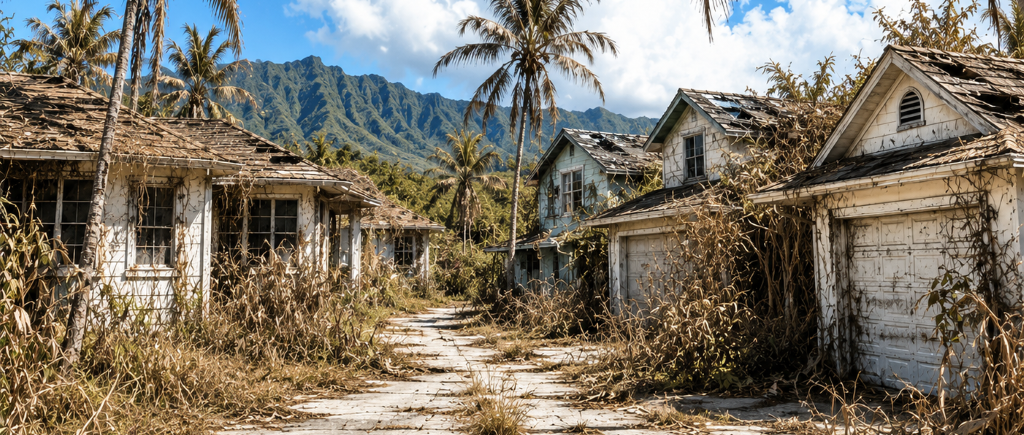
Above… an imagined view of Princeville in 2050…

A short walk from our Princeville community, past the end of Hanalei Plantation Road, sit the concrete foundations of what was once Club Med Kauai. Built in the early 1970s, closed by 1980, knocked down to rebar by Hurricane Iwa and never rebuilt. The jungle has been doing the rest for forty years. It’s a useful thing to look at, because it answers a question we never bother to ask: what does failure actually look like? Now picture Princeville the same way in 2050. Condos along the bluff with roofs collapsing in. Driveways cracked, hedges gone wild, palms half-dead from neglect. Pool decks taken back by groundcover. The illustrations in this post have been “enhanced” by AI.

So how would we actually get there?
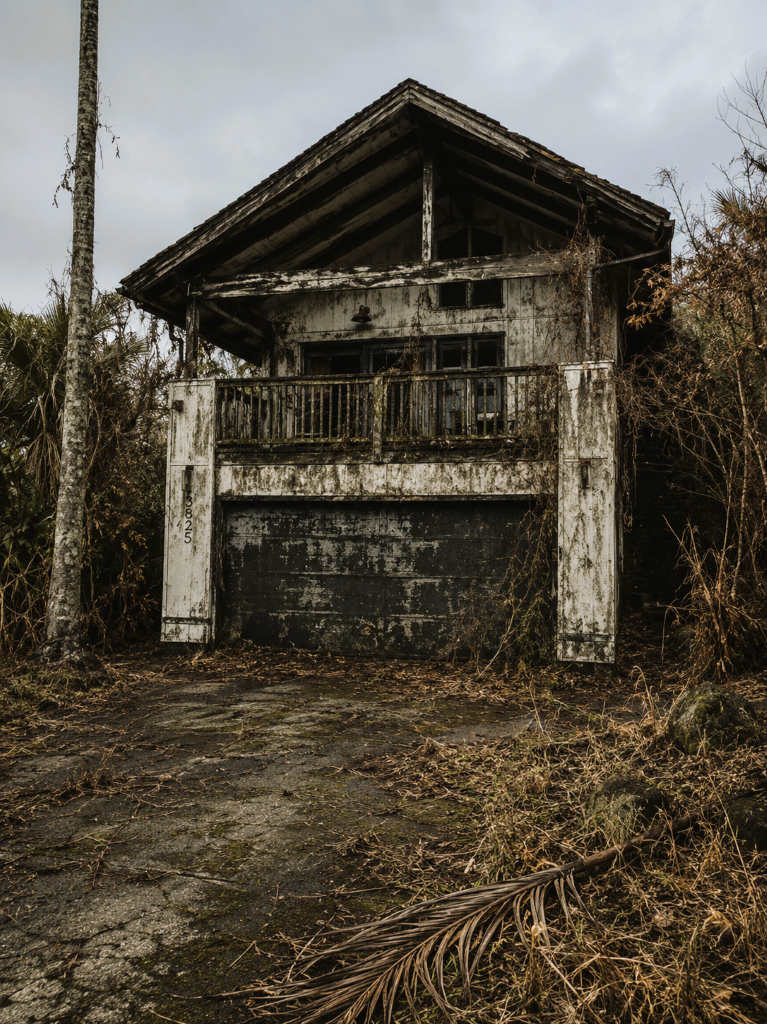
It takes a slow version of a hurricane: An association that can’t decide or get anything done. Reserves that lose ground to construction costs every year. A coastline that keeps eating the road. The North Shore growing more cut off as Kuhio Highway gets less reliable. Short-term renters disappearing because the math no longer works for them. Owners holding properties they can’t easily sell, watching values drift down, deferring maintenance one more year, then one more.

Behind all of that, a management layer that mostly isn’t there. A general manager who treats the job as a place to wait out the day. An office nobody wants to walk into. A Board whose members serve so they can say they’re on a Board, not because they intend to do anything with it. Decisions slipped past quorum. Projects stalled for years. The same problems on the Association’s agenda, meeting after meeting.

And owners. Mostly absentee, mostly tuned out. A third vote in a good year. Most can’t name three directors. Most have never opened a packet. The handful who speak up are easy to write off as cranks. Each piece of that, by itself, is survivable, but they compound. By 2035 the assessments are unaffordable.
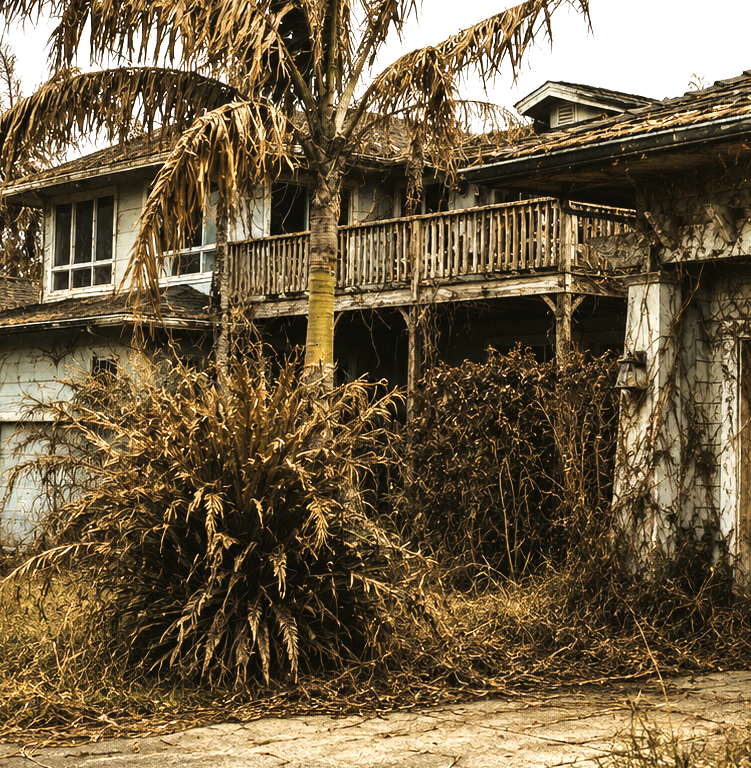
By 2040 the buyers have moved on. By 2050 the foundations are all that’s left, and somebody walks past them on a path the jungle hasn’t quite swallowed yet, and tries to imagine what was once here. None of that is inevitable. It’s also not far-fetched. Club Med thought it would be there forever too.

What keeps Princeville from going that way is fairly boring: A general manager who actually manages. A Board that does the work. Owners who read, vote, and show up. Reserves funded honestly. Roads and drainage fixed before they fail, not after. None of it is glamorous. None of it lends itself to a Nextdoor argument. But it’s the entire game. To all of you in the community, the Club Med foundations are a five-minute drive from your residence. Worth a walk through them now and then, just to remember that things end.

***

Design Rules in Princeville: Why They Exist and Why They Matter

What the governing documents say about the Community Design Committee

Princeville was developed as a planned community, and its appearance and character are guided by its founding documents, including the PHCA Charter of Incorporation, PHCA By-Laws, the Protective Covenants, the Community Rules, and the Community Design Committee (CDC) Architectural Rules.

The Protective Covenants (1971) created the Community Design Committee and require that any building, exterior change, or landscaping modification be reviewed and approved by the Committee before construction begins. The purpose is to ensure that buildings, materials, landscaping, and design are appropriate to the lot, harmonious with the surroundings, and consistent with the overall appearance of the community. The CDC is typically composed of volunteer members appointed by the PHCA Board and supported by staff. The Committee reviews proposed construction, exterior modifications, landscaping, and similar changes, and provides written approvals or required revisions. It can also adopt and update architectural and landscaping rules.

The PHCA Board of Directors remains the governing body of the Association and establishes policies and rules for the community as a whole. The CDC works under this broader governance structure. In practice, the Committee handles design review and technical guidance, while the Board oversees policy, appeals, and community governance. In general terms, the CDC rules cover:

  • Architectural design and materials
  • Building size, height, and setbacks
  • Landscaping and tree removal
  • Exterior paint and roofing
  • Fences, lighting, driveways, and equipment
  • Pools, solar panels, and other exterior additions

The goal is to maintain a consistent design character while protecting property values and the natural beauty of Princeville.

Design rules in planned communities: why they evolve

Almost all large planned communities in the United States have some form of architectural or design review. These rules usually address the same issues that Princeville’s CDC reviews: building appearance, landscaping, fencing, exterior colors, and the visual impact of new construction. Over time, the expectations of residents and investors change. Communities that were designed decades ago often revisit their design rules to reflect new priorities. These priorities can include environmental sustainability, updated construction materials, energy efficiency, or changes in architectural style. As communities mature, they also face practical questions such as how to manage aging homes, renovations, and new building technologies.

Across the United States, many planned communities are updating their design guidelines in response to broader trends. These include greater emphasis on environmentally sensitive construction, storm-resistant materials, water conservation, and landscaping that fits local ecosystems. In a place like Kauai’s North Shore, this often means encouraging designs that blend into the landscape, use natural materials, and respect views of mountains and ocean. Color palettes, rooflines, and landscaping are frequently designed to complement the tropical environment rather than dominate it.

Keeping Princeville attractive over the next two decades

Communities that remain attractive and desirable over time usually do two things well.

  • First, they maintain clear and consistent design rules.
  • Second, they periodically review and update those rules as conditions change.

Many planned communities review their design guidelines every few years to reflect new building technologies, sustainability practices, and changing homeowner expectations. This helps avoid outdated rules while preserving the community’s original design vision. For Princeville, the same principle applies. The community benefits from protecting its scenic setting, maintaining high design standards, and ensuring that new construction fits the North Shore environment. At the same time, the PHCA and the CDC should periodically review their rules to reflect current best practices in architecture, sustainability, and landscaping.

Ideal qualifications for members of the Community Design Committee

Because the CDC reviews architecture, landscaping, and exterior property changes across the community, its members ideally bring a mix of design knowledge, construction experience, and local familiarity. In many communities, committees include people with backgrounds in architecture, building, landscaping, planning, or real estate, along with long-time residents who understand the character of the neighborhood. Princeville’s own CDC has often included volunteers with experience such as architects, builders, and real estate professionals. Beyond professional expertise, the most important qualifications are practical judgment and fairness. Members should be able to read plans, evaluate how projects will affect neighboring properties and the broader landscape, and apply the design rules consistently. Equally important are a willingness to volunteer time, respect for the community’s natural setting, and the ability to balance individual property rights with the shared goal of preserving Princeville’s appearance and long-term property values.

A thoughtful approach can help Princeville remain both visually distinctive and economically strong. Well-maintained design standards protect the character of the community while also supporting property values and long-term investment in the area.

***

Keeping Princeville on Track: A Call for Engagement and Practical Solutions

Princeville is a planned community with strong foundations. Its governing documents, committees, and Board structure were designed to support long-term property values, community standards, and shared amenities. This only works, however, if day-to-day execution is consistent, transparent, and responsive to members.

In recent periods, there is a growing perception among owners that the PHCA Board and management are not meeting basic operational expectations. Routine matters, such as timely communication, delivery of projects, website updates, and signage improvements, have faced repeated delays. More fundamental responsibilities, including maintaining clear and regular communication with members and conducting annual elections in a predictable and organized manner, appear to be uneven. These are not strategic or complex challenges; they are core governance and management functions.

These gaps have two direct impacts. First, they affect confidence in how the Association operates. Second, they influence property values and the overall attractiveness of Princeville as a place to live and invest. In planned communities, governance quality is not abstract, it is reflected in infrastructure upkeep, rule enforcement, transparency, and member trust.

This is not a matter of assigning blame. Board members are volunteers with fiduciary obligations, and management operates within constraints. However, the current situation points to a need for adjustment, clearer priorities, stronger execution discipline, and more consistent engagement with the membership.

What Can Be Done

There are practical steps that could improve performance:

  • Establish and communicate a list of operational priorities with timelines, and ensure that timelines are kept.
  • Provide regular, concise updates to members on progress and delays
  • Ensure that elections are conducted on schedule, with clear procedures and communication consistent with legal obligations.
  • Improve access to information through a functional and current website
  • Create structured channels for member input and feedback

These are standard practices in comparable associations. They are achievable with focus and accountability.

Your Input Matters

This post is intended as a starting point for constructive discussion.

  • Members are encouraged to share their observations about the current state of the Association and to propose specific, practical solutions. Comments should be factual, respectful, and focused on improving outcomes for the community.
  • All comments are reviewed by the site administrator prior to posting to ensure they meet these standards.

Princeville’s long-term value—both as a community and as an investment—depends on active participation and clear expectations. A constructive exchange of views is a necessary step toward improvement.

***

Starwood (1 Hotel) v. Mull/White Status Update (April 2026)

What the lawsuit is about

A dispute between private owners — not the PHCA

This case concerns whether the Princeville Makai (Woods Course) golf course land must remain a golf course after February 28, 2026, or whether the owner (Starwood / 1 Hotel) may redevelop it. Plaintiffs (Mull/White) argue that restrictions continue indefinitely through the community governing documents, while the owner argues the restriction expires on a fixed date and development may proceed.

This case is a legal dispute between two private property owners: Mull/White, who own homes adjacent to the golf course, and Starwood / SOF-XI, which owns the golf course property. The Princeville at Hanalei Community Association (PHCA) is not a party to the lawsuit. The case does not directly determine PHCA rights or obligations, although both sides have framed their arguments in ways that may influence community views and future governance discussions.

Position of SOS HUI

The SOS HUI is a group of Princeville property owners who have organized around concerns about the future of the golf course lands. Their position focuses on preserving the community’s open space character and visual quality, while raising concerns about potential increases in density, traffic, and environmental impacts. They generally support legal and planning interpretations that would limit or prevent redevelopment of the golf course property. The group represents a segment of the community, but it does not represent all owners and has no formal governance authority.

“Open space” — clarification of a common misconception

The golf course is often described as “open space,” but that label needs to be used carefully. From a zoning and planning perspective, the land does function as open space within the Princeville master plan. However, in practical terms, the property is privately owned and has always operated as a paid golf facility. Residents and visitors do not have general access rights to the land. As a result, the issue is not about preserving a public park, but about determining the future use of private property that has historically been maintained as golf open space.

Does PHCA have oversight responsibility over the golf course?

Based on the governing documents and the court record, the CC&Rs apply only to land that was explicitly included in, or later annexed into, Princeville at Hanalei. The golf course land has historically been treated as separate and outside of PHCA control. The record shows that PHCA has not enforced its rules on the golf course, has not assessed the golf course owner, and has not treated the owner as a member of the association.

The trial court reached a different conclusion by linking the golf course dedication to the CC&Rs and finding that the restrictions could extend through the association framework. However, that ruling is currently under appeal and is not final. As things stand today, PHCA does not exercise operational oversight over the golf course.

Starwood (1 Hotel) appellate position

In its appeal, Starwood argues that the trial court decision is legally flawed on two main grounds:

1. Title / land use restriction

On the title and land use issue, Starwood argues that the governing dedication document is clear and unambiguous: it sets a fixed expiration date of February 28, 2026. The company maintains that the golf course land is not subject to the Princeville CC&Rs and therefore cannot be automatically renewed through those provisions. In its view, the trial court departed from the plain language of the recorded documents by relying on extrinsic and inadmissible evidence to reinterpret the restriction. Starwood further contends that extending the restriction indefinitely would create uncertainty around property rights and weaken the reliability of recorded land instruments in Hawai‘i.

2. Anthrax / nuisance claim

On the anthrax and nuisance claim, Starwood argues that the alleged risk is speculative and not supported by evidence. The company notes that no viable spores have been identified, no actual health risk has been demonstrated, and no anthrax cases have occurred in the area for over a century. It further contends that the court improperly shifted the burden of proof and issued a broad and unclear injunction that effectively blocks all development without a factual basis. As a result, Starwood is asking the appellate court to reverse the ruling, lift the injunction, confirm that the golf course restriction expires in 2026, and allow any future development to proceed through standard regulatory review.

Bottom line

The trial court ruled in favor of Mull/White, extending the golf course restrictions and blocking development. That decision is now on appeal and is not final. The case raises fundamental questions about property rights, community expectations, and the future of large private land holdings in Princeville. The outcome will have a direct impact on long-term land use, but remains unresolved as of April 2026.

***

Going Bananas on Kauai

On Kauai, bananas come in many forms, including apple bananas, Blue Java (“ice cream”) bananas, burro bananas, and manzano varieties. Despite their differences in size, taste, and texture, they all share the same basic process of ripening after harvest. A banana is picked while still green and firm, yet it already contains the internal machinery needed to mature. Even without the plant, it continues a programmed sequence of changes. This reflects a structured biological design in which the fruit carries its own instructions for development.

After picking, the banana begins to produce a natural gas called ethylene, which acts as a signal that activates ripening. Inside the fruit, stored starch is gradually converted into simple sugars such as glucose and fructose. This con version explains why a green banana tastes bland while a yellow banana tastes sweet. At the same time, the cell walls begin to break down, making the fruit softer. The green pigment fades, revealing the yellow color underneath, and aromatic compounds are formed, giving the banana its recognizable smell. This occurs in a coordinated sequence, each step enabling the next.

This progression illustrates a high level of biological organization. The banana is not passively decaying; it is actively transforming itself. Timing, structure, and feedback are all integrated in the fru itself. The result is a controlled shift from a storage form (starch, firmness, low aroma) to a consumption-ready form (sugar, softness, flavor). This transition occurs without external input beyond basic environmental conditions such as temperature. It is an amazing example of how natural systems bring about complex processes in simple forms across different varieties and environments.

Local bananas can be found at the many Kauai farmers’ markets found at this link: https://www.kauai.com/kauai-farmers-markets. Ask the vendor when each hand will be ready to eat and they will be happy to advise you. The closest farmers’ market to Princeville is the Saturday morning market at the Anaina Hou Community Park. See photos of the market here.

How to check Princeville (96722) weather—daily, hourly, wind, and swell

A Simple Daily Workflow for Checking Princeville Weather

If you live in or are visiting Princeville (96722), staying ahead of the weather—especially rain, wind, and swell—can make or break your day. The good news: you only need a few reliable tools to get a clear, real-time picture. Here’s a quick, no-fuss routine you can follow each morning (or whenever you need an update).

1. Start with the Official Forecast (Most Reliable)

Begin with the National Weather Service point forecast for Princeville: If you only check one source, make it this one. ???? https://forecast.weather.gov/MapClick.php?lat=22.22&lon=-159.48 This page gives you:

  • A detailed 7-day forecast
  • Localized conditions tailored to Princeville
  • A link to the Hourly Weather Forecast, which is key for timing rain, wind, and cloud cover throughout the day

2. Check Live Radar (What’s Happening Right Now)

Next, look at the Kauaʻi radar loop from NWS Honolulu: ???? https://radar.weather.gov/station/PHKI/standard This shows you real-time precipitation over the island. You’ll be able to see:

  • Incoming showers
  • Storm movement and direction
  • Whether that rain band will actually hit the North Shore

For a broader regional view, you can also use the Hawaiʻi radar mosaic here: ???? https://www.pacioos.hawaii.edu/visualization/hawaii-radar/

3. Compare Wind & Swell Models

Finally, use Windy to cross-check forecasts: ???? https://www.windy.com Tips for using it effectively:

  • Turn on Compare forecasts (ECMWF vs GFS)
  • Use the Meteogram/Airgram view for detailed wind timing
  • Check swell direction and size if you’re heading to the water

If models disagree, trust the NWS forecast and what you’re seeing on radar.

The 2-Minute Routine

Here’s the quick version:

  1. Open the NWS Princeville page → scan daily + hourly forecast
  2. Check the Kauaʻi radar loop → see what’s actually moving in
  3. Glance at Windy → confirm wind, rain timing, and swell

Enjoy!!!!!

Shared Values and the Future of Our Princeville Community

What Makes Princeville a Community

A place like Princeville is more than a collection of houses, condos and hotels. A community exists when people share a place, follow common rules, and care about the same things. In a planned community like Princeville, this idea is even stronger. Homes, roads, parks, and open spaces were designed together from the start. Shared values help make a community work. In Princeville those values often include caring for the natural beauty of the North Shore, maintaining a peaceful residential environment, protecting property values, and respecting neighbors. When residents recognize that they are stewards of the same place, a development becomes a community rather than just a neighborhood.

The Role of the Founding and Planning Documents

Princeville’s founding documents describe these shared values clearly. They explain how the community was intended to function and what it should preserve over time. The planning documents emphasize the importance of the landscape and environment. One statement notes that the unique character of the North Shore area is the product of a combination of physical, cultural and circumstantial interrelationships and interdependencies.” (North Shore Special Planning Area Report (Kaua‘i County planning study.) The same documents explain that protecting this character requires careful development and community participation over time. They state that “the conservation and enhancement of that resource [the environmental experience] guides all other decisions.”

The governance framework also highlights the importance of participation. Community governance relies on residents being involved, because more important than these documents is community participation in the process.” (North Shore Special Planning Area Report – Development Plan Concept section) These ideas show that Princeville was not only planned as a development. It was planned as a community built around shared responsibility.

Maintaining a Sense of Community

Communities do not maintain themselves automatically. They require communication, participation, and trust. The Board and management of the Association (PHCA) play an important role. They help maintain the physical infrastructure of the community, enforce rules fairly, and communicate openly with members. But the strength of a community also depends on residents. A healthy community requires several things:

  • Clear communication about decisions and future plans
  • Transparency in how the Association operates
  • Opportunities for residents to participate in committees and meetings
  • Respectful discussion of differences within the community

The Board can support these goals by sharing information regularly, encouraging participation in meetings and committees, and explaining how decisions relate to the long-term interests of Princeville. When residents stay informed and involved, the community remains strong. That involvement is what turns a planned development into a living community.

Winter Update: Princeville PHCA (Princeville 1)

A Plain Talk Community Update

Princeville residents often ask what is happening with our community association. Below is a quick update on the Princeville at Hanalei Community Association (PHCA), which governs Princeville 1. (Princeville 2, The Resort Group-owned area, is managed separately.)


The Makai Golf Course Dedication Expired in February 2026

At the end of February 2026, the so-called Makai Golf Course dedication reached its stated expiration date. The dedication was a recorded legal restriction stating that the land would be used for golf course and related recreational uses until February 28, 2026. As a reminder, the expiration has been the subject of a major lawsuit. Two long-time Princeville property owners, the Mull and White families, filed suit against the current owner of the Makai Golf Course land. The case concerns a basic legal question:

  • Does the dedication end in 2026 as written?
  • Or does it automatically renew indefinitely because of other community covenants?

The Mull/White families prevailed in the trial court during summer 2025. However, the decision has been appealed, and a formal appeal brief has already been filed. The case will now move into the appellate stage, which will likely involve significant legal work by both sides. At its core, this dispute is a legal conflict between two private property owners about how long the dedication lasts and what uses are allowed on the land. Both parties have also tried/are trying to gain the support of the PHCA Association and its Board, since the outcome could affect the future character of Princeville. For now, the issue remains unresolved and will likely take time to move through the courts.


Operational Issues at the PHCA Association

Over the past year, the PHCA Association has struggled to deliver on several of its own announced initiatives. Examples include:

  • A new PHCA website, which was announced long ago but still has not been completed.
  • Updated road signage, something Princeville 2 has already implemented.
  • Security patrol operations, which many residents feel are inconsistent or inefficient.
  • Procurement and service contracting, which continue to raise questions about efficiency and transparency.

The PHCA Board has also created a number of committees over the years. In practice, many of these committees appear to be largely inactive, or stuck in long discussions without producing concrete results. For residents who simply want to see the Association run efficiently, this situation can be frustrating.


A New PHCA Communications Committee

The Board recently created a new Communications Committee. The stated goal is to improve communication and community engagement. However, many residents may remember that the same goal was the main reason given for developing the new PHCA website in the first place. The idea was to move beyond the limitations of the current system and create a more open and modern platform for sharing and exchanging information with the community. According to statements made in recent meetings, the PHCA General Manager acknowledged that the new website project could not be completed internally. This is surprising to some residents because modern website platforms such as WordPress now provide ready-made templates, plug-ins, and tools that make building a basic community website relatively straightforward. The result appears to be that PHCA is returning to the existing system, which many residents believe does not allow for meaningful community engagement.


PHCA Governance: More Power for Management?

Finally, there are indications that changes to PHCA governance may be underway. Some proposed changes appear to place more operational authority in the hands of the General Manager rather than the Board itself. This raises a simple question that many residents are asking: If management performance has already been under scrutiny, why concentrate more authority in that position rather than improving oversight and accountability? For many residents, the concern is straightforward: more authority without better results does not improve community governance.


A Community That Deserves Better Communication

Princeville is a remarkable community. Many residents care deeply about protecting its natural beauty, property values, and long-term stability. That requires:

  • transparent communication
  • clear decision-making
  • and steady operational management

Residents should continue paying attention to these issues and asking questions. Strong communities work best when members stay informed and engaged. Plain Talk will continue to follow these developments.


Plain Talk — Community discussion for Princeville.

Princeville’s Queen’s Bath: Beauty, Power, and Risk


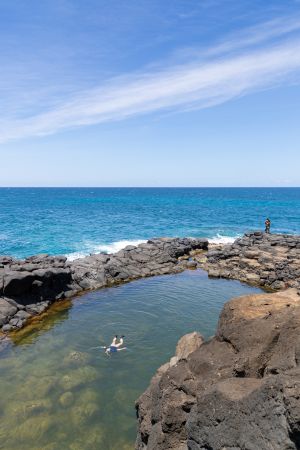
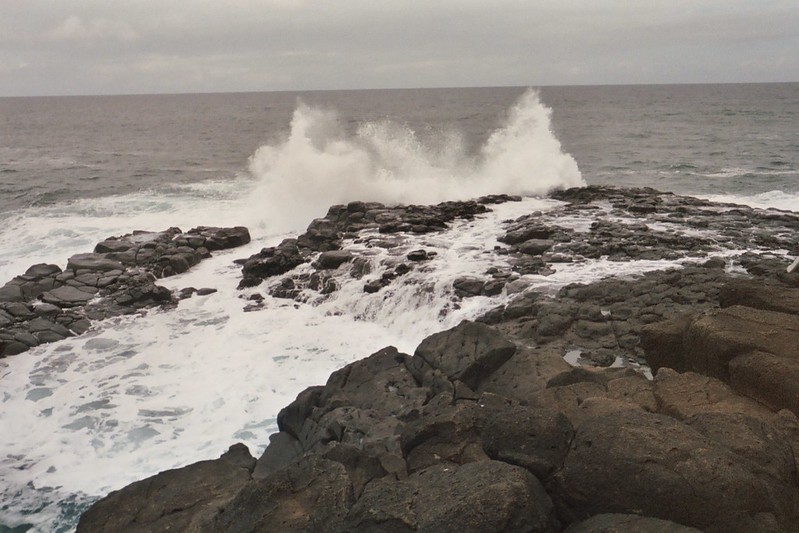
Queen’s Bath is one of the most dramatic places in Princeville and on Kaua‘i’s North Shore. Many people—residents and visitors alike—enjoy walking the trail to see the ocean, watch waves explode against the lava shelf, or take photos of the natural pool carved into the rock. The site is stunning. It is also dangerous. Understanding Queen’s Bath means knowing its history, location, seasonal limits, and a record of serious accidents.


A Short History

The name “Queen’s Bath” finds its origin with earlier Hawaiian bathing pools used by ali‘i, (persons of high rank) but the current was formed when lava flowed into the ocean and hardened into a natural basin. With Princeville’s development in the 1970s, the pool became a known landmark. Social media later turned it into an even bigger attraction.


Where It Is in Princeville

Queen’s Bath sits at the end of Punahele Street and Kapiolani Loop, Behind the gate, a steep trail leads down through mud and roots. The trail ends on a wide lava shelf above the ocean. You will need to walk a couple of hundred yards west on this shelf to the bath. This shelf is fully exposed to open ocean waves which may push you against rocks or take you out to sea. Unlike Hanalei Bay, there is no reef or lagoon in front of it to protect you.


Why Weather and Seasons Matter

The North Shore is famous for huge winter surf. Queen’s Bath becomes extremely dangerous from November through April, when waves slam over the rocks and fill the pool with violent water. The County posts warning signs each winter. Even in summer, a “calm” day can turn dangerous when a long-period swell arrives from far away.


Documented Accidents

Queen’s Bath has a long history of serious injuries and deaths. Accidents happen in two main places:

  • The Trail: Hikers often slip in mud, lose footing on roots and wet rocks, and injured visitors must sometimes be carried uphill by rescuers.
  • The Lava Shelf: Unexpected waves can sweep people off the rocks and pull them into deep, turbulent water, where escape becomes almost impossible. Many victims are slammed against the lava shelf by backwash and surf, and several drownings have occurred over the past decades.

These events often happen when people stand near the edge for photos—just seconds before a large set of waves arrives.


Why the Risk Is High

Four factors make Queen’s Bath one of Kaua‘i’s most hazardous spots:

  1. Unpredictable surf – Set waves can appear without warning.
  2. Low rock shelf – Waves easily wash over the entire area.
  3. Strong backwash – Water pulls victims outward after impact.
  4. Slippery surfaces – Algae and spray reduce balance and footing.

Practical Safety Notes

For both residents and visitors:

  • Do not go in winter.
  • Stay away from the edge, even on calm days.
  • Expect the trail to be muddy and slick.
  • Check surf forecasts, but remember they are not guaranteed.

In Closing

Queen’s Bath is part of what makes Princeville special—wild coastline, sweeping views, and the raw power of the Pacific. But it is also a place where many people have hurt themselves on the slippery trail, especially after heavy rain, or misjudged the ocean and paid a terrible price. Queen’s Bath will always be beautiful. It should also be approached with care.


Links

Kauai North Shore

Photos on Flickr

Wikimedia