Going Bananas on Kauai

On Kauai, bananas come in many forms, including apple bananas, Blue Java (“ice cream”) bananas, burro bananas, and manzano varieties. Despite their differences in size, taste, and texture, they all share the same basic process of ripening after harvest. A banana is picked while still green and firm, yet it already contains the internal machinery needed to mature. Even without the plant, it continues a programmed sequence of changes. This reflects a structured biological design in which the fruit carries its own instructions for development.

After picking, the banana begins to produce a natural gas called ethylene, which acts as a signal that activates ripening. Inside the fruit, stored starch is gradually converted into simple sugars such as glucose and fructose. This con version explains why a green banana tastes bland while a yellow banana tastes sweet. At the same time, the cell walls begin to break down, making the fruit softer. The green pigment fades, revealing the yellow color underneath, and aromatic compounds are formed, giving the banana its recognizable smell. This occurs in a coordinated sequence, each step enabling the next.

This progression illustrates a high level of biological organization. The banana is not passively decaying; it is actively transforming itself. Timing, structure, and feedback are all integrated in the fru itself. The result is a controlled shift from a storage form (starch, firmness, low aroma) to a consumption-ready form (sugar, softness, flavor). This transition occurs without external input beyond basic environmental conditions such as temperature. It is an amazing example of how natural systems bring about complex processes in simple forms across different varieties and environments.

Local bananas can be found at the many Kauai farmers’ markets found at this link: https://www.kauai.com/kauai-farmers-markets. Ask the vendor when each hand will be ready to eat and they will be happy to advise you. The closest farmers’ market to Princeville is the Saturday morning market at the Anaina Hou Community Park. See photos of the market here.

How to check Princeville (96722) weather—daily, hourly, wind, and swell

A Simple Daily Workflow for Checking Princeville Weather

If you live in or are visiting Princeville (96722), staying ahead of the weather—especially rain, wind, and swell—can make or break your day. The good news: you only need a few reliable tools to get a clear, real-time picture. Here’s a quick, no-fuss routine you can follow each morning (or whenever you need an update).

1. Start with the Official Forecast (Most Reliable)

Begin with the National Weather Service point forecast for Princeville: If you only check one source, make it this one. ???? https://forecast.weather.gov/MapClick.php?lat=22.22&lon=-159.48 This page gives you:

  • A detailed 7-day forecast
  • Localized conditions tailored to Princeville
  • A link to the Hourly Weather Forecast, which is key for timing rain, wind, and cloud cover throughout the day

2. Check Live Radar (What’s Happening Right Now)

Next, look at the Kauaʻi radar loop from NWS Honolulu: ???? https://radar.weather.gov/station/PHKI/standard This shows you real-time precipitation over the island. You’ll be able to see:

  • Incoming showers
  • Storm movement and direction
  • Whether that rain band will actually hit the North Shore

For a broader regional view, you can also use the Hawaiʻi radar mosaic here: ???? https://www.pacioos.hawaii.edu/visualization/hawaii-radar/

3. Compare Wind & Swell Models

Finally, use Windy to cross-check forecasts: ???? https://www.windy.com Tips for using it effectively:

  • Turn on Compare forecasts (ECMWF vs GFS)
  • Use the Meteogram/Airgram view for detailed wind timing
  • Check swell direction and size if you’re heading to the water

If models disagree, trust the NWS forecast and what you’re seeing on radar.

The 2-Minute Routine

Here’s the quick version:

  1. Open the NWS Princeville page → scan daily + hourly forecast
  2. Check the Kauaʻi radar loop → see what’s actually moving in
  3. Glance at Windy → confirm wind, rain timing, and swell

Enjoy!!!!!

Princeville’s Queen’s Bath: Beauty, Power, and Risk


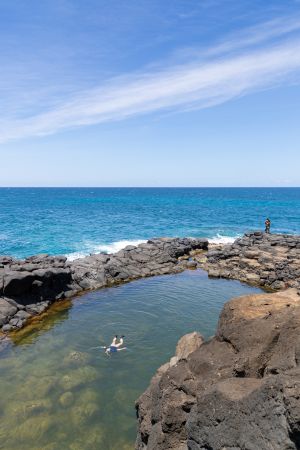
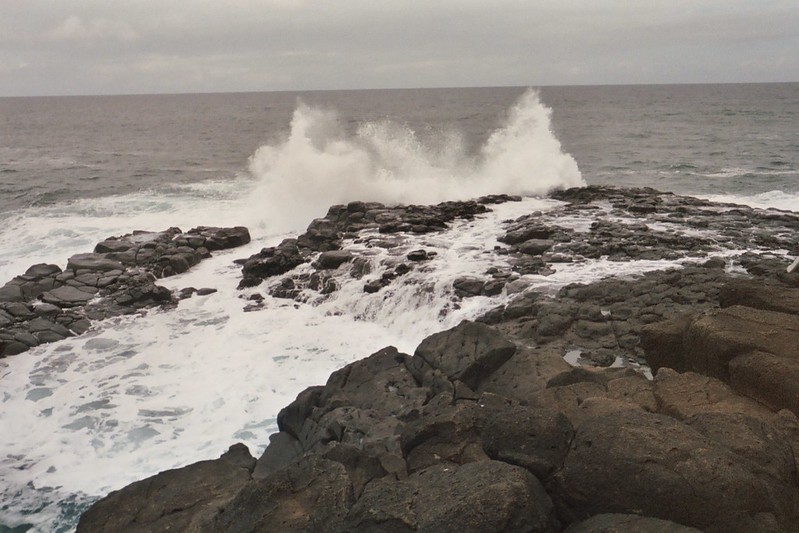
Queen’s Bath is one of the most dramatic places in Princeville and on Kaua‘i’s North Shore. Many people—residents and visitors alike—enjoy walking the trail to see the ocean, watch waves explode against the lava shelf, or take photos of the natural pool carved into the rock. The site is stunning. It is also dangerous. Understanding Queen’s Bath means knowing its history, location, seasonal limits, and a record of serious accidents.


A Short History

The name “Queen’s Bath” finds its origin with earlier Hawaiian bathing pools used by ali‘i, (persons of high rank) but the current was formed when lava flowed into the ocean and hardened into a natural basin. With Princeville’s development in the 1970s, the pool became a known landmark. Social media later turned it into an even bigger attraction.


Where It Is in Princeville

Queen’s Bath sits at the end of Punahele Street and Kapiolani Loop, Behind the gate, a steep trail leads down through mud and roots. The trail ends on a wide lava shelf above the ocean. You will need to walk a couple of hundred yards west on this shelf to the bath. This shelf is fully exposed to open ocean waves which may push you against rocks or take you out to sea. Unlike Hanalei Bay, there is no reef or lagoon in front of it to protect you.


Why Weather and Seasons Matter

The North Shore is famous for huge winter surf. Queen’s Bath becomes extremely dangerous from November through April, when waves slam over the rocks and fill the pool with violent water. The County posts warning signs each winter. Even in summer, a “calm” day can turn dangerous when a long-period swell arrives from far away.


Documented Accidents

Queen’s Bath has a long history of serious injuries and deaths. Accidents happen in two main places:

  • The Trail: Hikers often slip in mud, lose footing on roots and wet rocks, and injured visitors must sometimes be carried uphill by rescuers.
  • The Lava Shelf: Unexpected waves can sweep people off the rocks and pull them into deep, turbulent water, where escape becomes almost impossible. Many victims are slammed against the lava shelf by backwash and surf, and several drownings have occurred over the past decades.

These events often happen when people stand near the edge for photos—just seconds before a large set of waves arrives.


Why the Risk Is High

Four factors make Queen’s Bath one of Kaua‘i’s most hazardous spots:

  1. Unpredictable surf – Set waves can appear without warning.
  2. Low rock shelf – Waves easily wash over the entire area.
  3. Strong backwash – Water pulls victims outward after impact.
  4. Slippery surfaces – Algae and spray reduce balance and footing.

Practical Safety Notes

For both residents and visitors:

  • Do not go in winter.
  • Stay away from the edge, even on calm days.
  • Expect the trail to be muddy and slick.
  • Check surf forecasts, but remember they are not guaranteed.

In Closing

Queen’s Bath is part of what makes Princeville special—wild coastline, sweeping views, and the raw power of the Pacific. But it is also a place where many people have hurt themselves on the slippery trail, especially after heavy rain, or misjudged the ocean and paid a terrible price. Queen’s Bath will always be beautiful. It should also be approached with care.


Links

Kauai North Shore

Photos on Flickr

Wikimedia

Weekly & Monthly Markets on Kauai’s North Shore

Nothing feels better than driving a few miles out of Princeville to visit one of the many farmers and craft markets on Kauai’s North Shore. Fruits and vegetables are sure to be at their peak when you buy them. The selection changes every week as each season brings new discoveries,including: rambutan, longan, lychee, starfruit, cherimoya, soursop, mountain apple, lilikoi, dragon fruit, breadfruit, tangelos, poha berries, abiu, jaboticaba, taro varieties, okinawan sweet potato, turmeric root, galangal, winged beans, malabar spinach, chayote squash, bitter melon, moringa leaves and pods, upland taro, malaysian taro. Of course you can find other spectacular fares in season, including mangos of all varieties, avocados or different sorts, local bananas, local pineapples in season, varieties of lettuces, carrots, beans, cucumbers, squash, mint, basil, parsley, string beans, etc. etc.

Below is a schedule of the main markets around Princeville, subject to change.

Waipa Farmers Market

Location: Waipa Foundation, Hanalei
Day: Tuesday (weekly)
Type: Farmers, food, crafts, some art

Hanalei Farmers Market

Location: Hanalei (near Hale Halawai)
Day: Saturday (weekly)
Type: Farmers, crafts, art
Every Saturday from 9:30 a.m. to noon, a large grassy lawn off Malolo Road is covered with more than 50 stalls. 

Kilauea Farmers Market

Location: Kilauea Community Ag Center
Day: Thursday (weekly)
Type: Farmers, prepared foods, local products

Kīlauea Sunshine Market

Location: Kilauea Neighborhood Center
Day: Thursday morning (weekly)
Type: Farmers, flowers, plants

Anaina Hou Community Market

Location: Anaina Hou Community Park, Kilauea
Day: Saturday (weekly)
Type: Produce, fruit, Crafts, art, food vendors
Supports local agriculture, sustainable food distribution, local artisans, and the Kauai economy. With over 30 unique vendors, the market showcases the best of Kauai Grown Produce and authentic Kauai Made Crafts. Don’t forget Midnight Bear Bread

Kilauea Art Night

Location: Downtown Kilauea
Day: Last Saturday (monthly)
Type: Art, crafts, music, food

Princeville Makers Market

Location: Princeville Center
Day: Most Sundays
Type: Art, crafts, some food vendors

Makai Arts & Music Festival

Location: Princeville Makai Golf Course
Day: Wednesday (weekly)
Type: Art and crafts (local makers; some packaged food)